Best Manga With Furigana for Japanese Learners
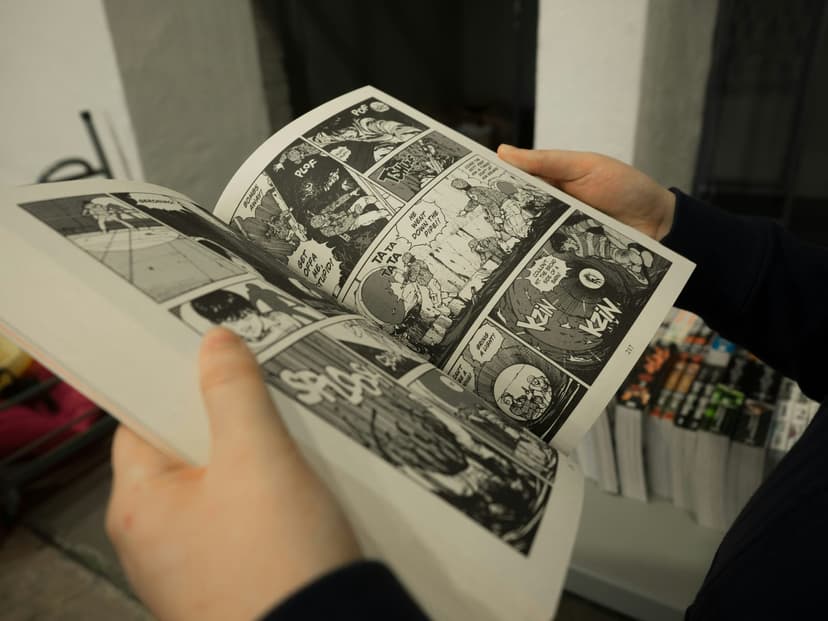
If you’re learning Japanese, finding manga with furigana can make a huge difference to your reading experience.
Furigana (the small kana written above kanji) allows learners to start reading native Japanese much earlier than they otherwise could. Instead of constantly stopping to search for readings, you can focus more on understanding the story, recognising vocabulary, and building reading confidence.
For students preparing to attend a Japanese language school in Japan, manga can also be one of the most useful ways to bridge the gap between textbook Japanese and native material before arriving.
Not all manga are equally beginner-friendly though. Some series are far easier to read than others, even when they technically contain furigana.
This guide covers the best manga with furigana for Japanese learners in 2026, especially for beginners and intermediate learners looking to start reading native Japanese comfortably.
What Makes Manga Good for Japanese Learners?
The best manga for Japanese learners usually share a few important characteristics:
- Furigana
- Everyday vocabulary
- Clear visual storytelling
- Manageable dialogue
- Relatively simple sentence structures
Slice-of-life manga tends to work especially well because it focuses on everyday situations involving family, school, shopping, hobbies, food, and daily routines. This kind of vocabulary is much more useful for real life Japanese than fantasy or battle heavy terminology.
Best Manga With Furigana for Beginners
よつばと! (Yotsuba&!)
Yotsuba& is probably the single most recommended manga for Japanese learners.
The story follows Yotsuba, an energetic young girl discovering ordinary everyday life. Because of this, the manga is packed with practical vocabulary related to shopping, transportation, parks, family, seasons, and daily activities.
The visual storytelling is excellent, which makes it easier to infer meaning even when you do not fully understand every sentence. Chapters are also largely self-contained, so the series feels less intimidating than long plot-heavy manga.
One reason Yotsuba& remains so popular among learners is that it still feels genuinely entertaining as an adult, unlike some beginner resources that can feel overly childish.
There is one caveat though: Yotsuba sometimes speaks like a child, so certain expressions are intentionally grammatically incorrect or childish. Overall though, it remains one of the strongest first manga choices for learners around the N5–N4 level.
チーズスイートホーム (Chi’s Sweet Home)
Chi’s Sweet Home is one of the easiest native manga available for beginners.
The story follows a kitten, and the language reflects that simplicity through short sentences, repetitive phrasing, and strong visual support throughout the story.
Because the manga is less text-dense than most standard manga, it feels much less overwhelming for learners starting their first native reading experience. Many beginners find it psychologically easier to finish chapters compared to dialogue-heavy series.
Like Yotsuba&, some speech patterns are intentionally childish because the main character is a kitten, but the simplicity still makes it one of the gentlest introductions to native Japanese.
しろくまカフェ (Shirokuma Cafe)
Shirokuma Cafe has been recommended in Japanese learner communities for years.
The story revolves around a polar bear who runs a cafe frequented by both humans and animals, including a panda who avoids work whenever possible and a socially anxious penguin. Despite starring animal characters, the situations are surprisingly grounded in everyday life and revolve around cafes, hobbies, work, friendships, camping, and casual conversations.
The pacing is calm, the dialogue is relatively manageable, and the layouts are easier to read than many modern manga. Many learners also appreciate that it feels slightly more mature than some children’s manga while still remaining beginner friendly.
The main difficulty comes from occasional puns and wordplay, but overall it remains one of the safest recommendations for early immersion.
ドラえもん (Doraemon)
Doraemon has long been considered one of the classic beginner manga for Japanese learners.
The story follows Nobita, an unlucky and underachieving schoolboy, and Doraemon, a robotic cat sent from the future to help improve Nobita’s life. Doraemon uses futuristic gadgets to solve everyday problems, although the situations usually spiral into chaos by the end of each chapter.
Because it targets children, it usually contains full furigana, relatively accessible grammar, and straightforward sentence structures. The episodic format also makes it easy to read casually without needing to remember complicated long-running plot details.
Each chapter revolves around a simple problem involving one of Doraemon’s gadgets, which creates highly contextual situations that are easier for learners to follow.
Doraemon is also culturally useful. Many references and expressions from the series are deeply embedded in Japanese pop culture, so familiarity with it can occasionally help learners understand references encountered later in Japan.
フライングウィッチ (Flying Witch)
Flying Witch is often recommended for learners who want something more natural-feeling than children’s manga.
The story follows Makoto, a young witch who moves to rural Aomori to live with relatives as part of her witch training. Although magic exists within the series, most chapters focus on slow everyday life in the countryside, including cooking, gardening, local culture, seasonal activities, and family interactions. Although the story contains fantasy elements, most of the dialogue revolves around calm everyday life in rural Japan.
The slower pacing and natural conversations make it easier for many learners to process Japanese comfortably without feeling overwhelmed. It is especially popular among upper beginner and lower intermediate learners looking to transition into more natural native material.
Crystal Hunters
Crystal Hunters is unusual because it was intentionally designed for Japanese learners.
The story follows a group of adventurers exploring caves and dangerous environments in search of valuable crystals. While the setting is fantasy-based, the manga was specifically written to gradually introduce learners to Japanese grammar and vocabulary in a controlled way. For learners who feel overwhelmed jumping directly into native material, it can be an excellent stepping stone into immersion.
Some may prefer fully native manga because they find educational material less engaging, but Crystal Hunters remains one of the most beginner-friendly reading resources currently available.
How to Study Japanese With Manga Effectively
Reading manga works best when combined with active study rather than passive reading alone.
In the beginning, reading will feel slow. Most learners need frequent dictionary lookups, and that is completely normal. Instead of trying to understand every single word perfectly, it is usually more effective to focus on following the overall meaning of the scene first.
Rereading chapters is also surprisingly effective. Many learners notice that comprehension improves dramatically during the second or third read once the vocabulary and context become familiar.
The most important factor, though, is consistency. Learners who read regularly tend to improve much faster than learners who wait until Japanese feels easy before starting native material.
Final Thoughts
For students preparing to attend a Japanese language school, reading manga with furigana can be one of the best ways to become more comfortable with native Japanese before arriving.
Not because manga replaces structured study, but because it helps bridge the gap between textbook Japanese and the way Japanese is actually used by native speakers. Pair it with a core textbook from our best Japanese textbooks guide and a clear plan for passing the JLPT N5.
The most important thing is choosing something you genuinely enjoy reading. Long-term consistency matters far more than finding the “perfect” difficulty level. When you are ready to take your reading further and study in Japan, browse our school directory to find a program that fits.