Japanese Student Visa: Requirements, Process, and What to Expect

If you’re planning to study Japanese in Japan for more than a few months, chances are you’ll need a Japanese student visa. While the process can seem complicated at first, it’s actually quite structured once you understand how it works and most language schools will support you through it.
What Is a Japanese Student Visa?
The Student Visa is a status of residence specifically for individuals studying at Japanese language schools, vocational colleges, or universities. With a student visa, you can:
- Live in Japan for 6 months to 2 years
- Study full-time at a school in Japan
- Apply for permission to work part-time up to 28 hours per week
This visa provides you with a residence card, access to national health insurance, and the ability to open a Japanese bank account
Do You Need a Student Visa to Study Japanese in Japan?
It depends on how long you plan to study. While short-term courses of up to three months can often be completed on a Tourist Visa, any stay ranging from six months to a maximum of two years requires a Student Visa.
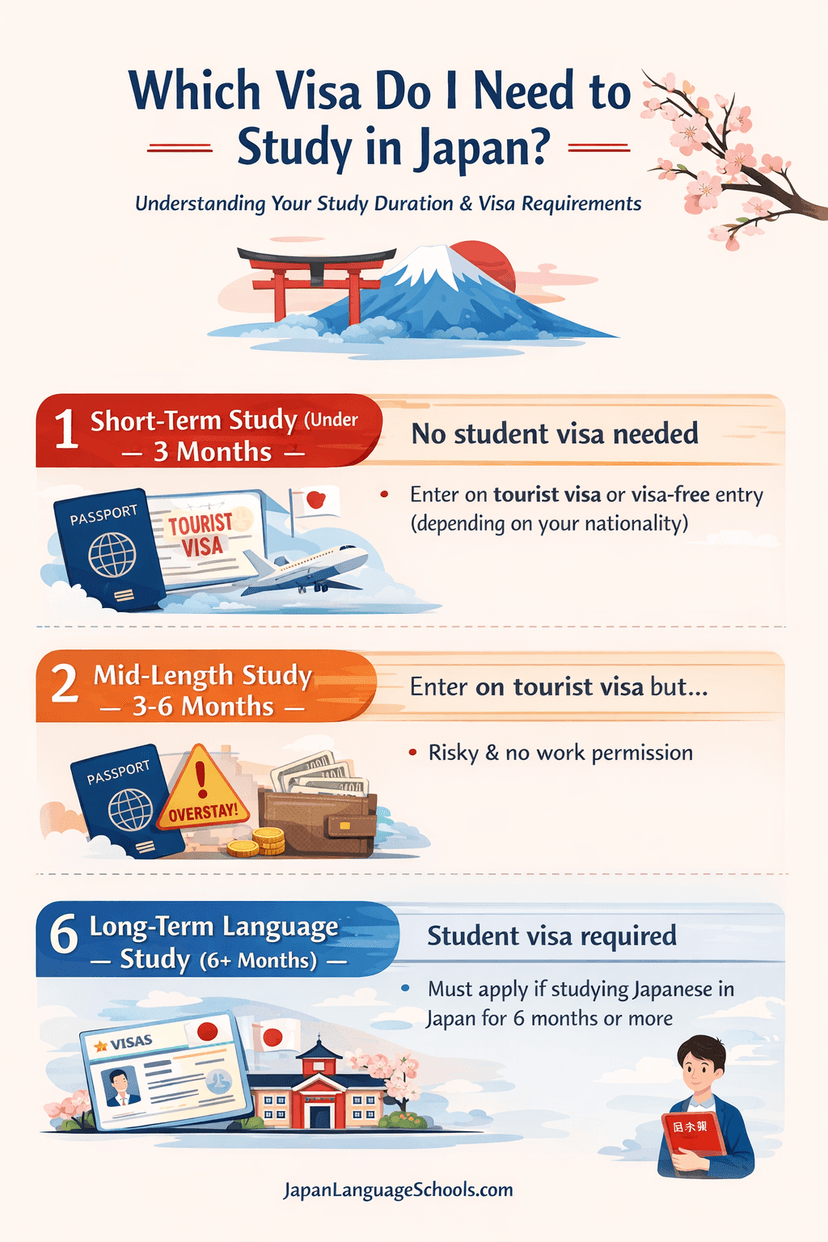
Most language schools that offer courses of 6 months or longer are authorised to sponsor student visas — but not all schools do. Always check that visa sponsorship is available and that the school is authorized by the Japanese Ministry of Justice before applying.
What is the Certificate of Eligibility (COE)
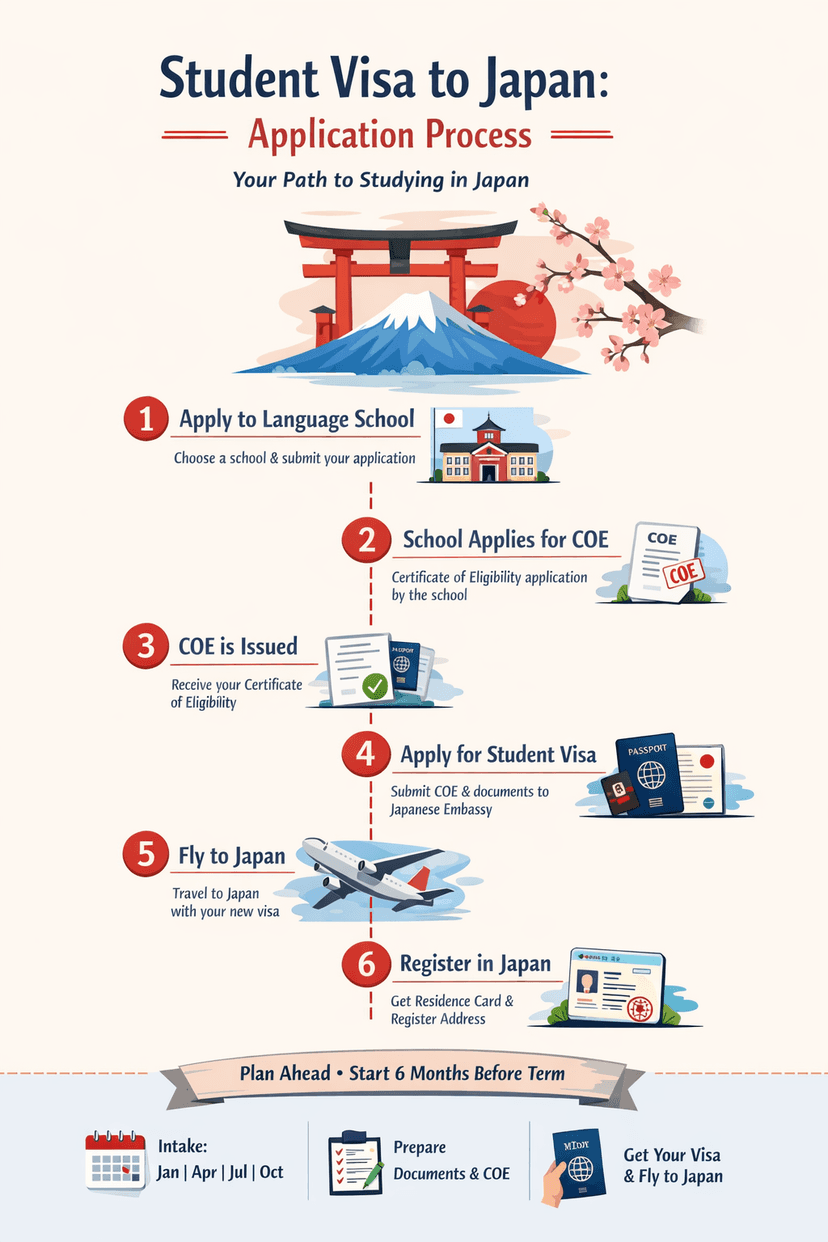
Almost all student visa applications are based on a document called the Certificate of Eligibility (COE).
The COE is issued by Japan’s Immigration Services Bureau and confirms that you meet the requirements to enter Japan as a student.
Who applies for it?
- Your Japanese language school applies for the COE on your behalf
- You cannot apply for it yourself as an individual
Why it matters
- It significantly simplifies and speeds up the visa process
- Most Japanese embassies will not issue a student visa without it
How the Student Visa Process Works (Step by Step)
The student visa process starts once you have been accepted by your language school. The process has a few key stages and most schools help you through all of them.
When Should You Start Preparing?
Visa applications for Japanese language programs are not instant. Schools usually admit new students in quarterly terms (e.g., January, April, July, October), and the COE process itself can take 1–3 months or more to complete. Plan to start the whole process at least 6 months before your intended start date.
This gives you time to compile documents, get the COE, and submit your visa application before classes begin.
What Documents Do You Need?
Exact requirements vary by school and nationality, but these are commonly requested:
- Passport copy with prior Japan entry/exit stamps
- Proof of Japanese study (such as JLPT results or equivalent evidence of basic Japanese ability)
- Visa application form provided by your school
- Graduation certificate and academic records from your highest level of education
- ID photos taken within the last 3 months
- Financial proof, usually in the form of a bank statement, that you or your sponsor have enough funds to cover tuition and living expenses (the specific amount required will depend on your chosen school and course length)
Can You Work While Studying?
Yes, but only with permission. Once you arrive in Japan, you must apply for “Permission to Engage in Activity Other Than That Permitted by the Status of Residence.” Once approved, you can work up to 28 hours per week.
Common Mistakes to Avoid
When applying for a Japanese student visa, these pitfalls often trip people up:
- Starting too late and missing the intake
- Not providing clear financial documents
- Choosing a school that cannot sponsor visas
- Assuming you can convert a tourist visa to a student visa after arriving
- Skipping embassy requirements before booking flights
- Assuming 150+ hours of study alone is enough to meet admission requirements
Final Thoughts
Studying Japanese in Japan takes coordination, planning, and documentation.
If you want to stay long-term, work part-time, and immerse yourself in Japanese language and culture, a student visa is essential. Start early, choose a school that supports your goals, and follow the steps above and you’ll be well on your way to living and learning in Japan.